What is Makhana? Complete Guide to Fox Nuts (Lotus Seeds) 2026
Makhana has quickly become one of India's most popular healthy snack options. You may have seen it in supermarkets under names such as fox nuts, phool makhana, gorgon nuts, or lotus seeds. Its light, crunchy texture and mild flavor make it easy to roast, season, and add to both sweet and savory recipes.
But what is makhana, exactly? Where does it come from? Is makhana really a lotus seed? What are its nutritional benefits, and how can you include it in your daily diet?
This complete guide to makhana covers everything you need to know in 2026—from its botanical origin and cultivation to nutrition, health considerations, cooking methods, storage, and popular recipes.
What Is Makhana?
Makhana is the popped edible seed of the aquatic plant Euryale ferox, a plant belonging to the water-lily family. It is commonly known as fox nut, foxnut, gorgon nut, or phool makhana.
In India, makhana has traditionally been cultivated in ponds, wetlands, and other stagnant water bodies. The crop has a particularly strong connection with Bihar, where it has long been an important agricultural product. ICAR describes Euryale ferox as an aquatic crop grown in ponds, land depressions, oxbow lakes, swamps, and similar water bodies.
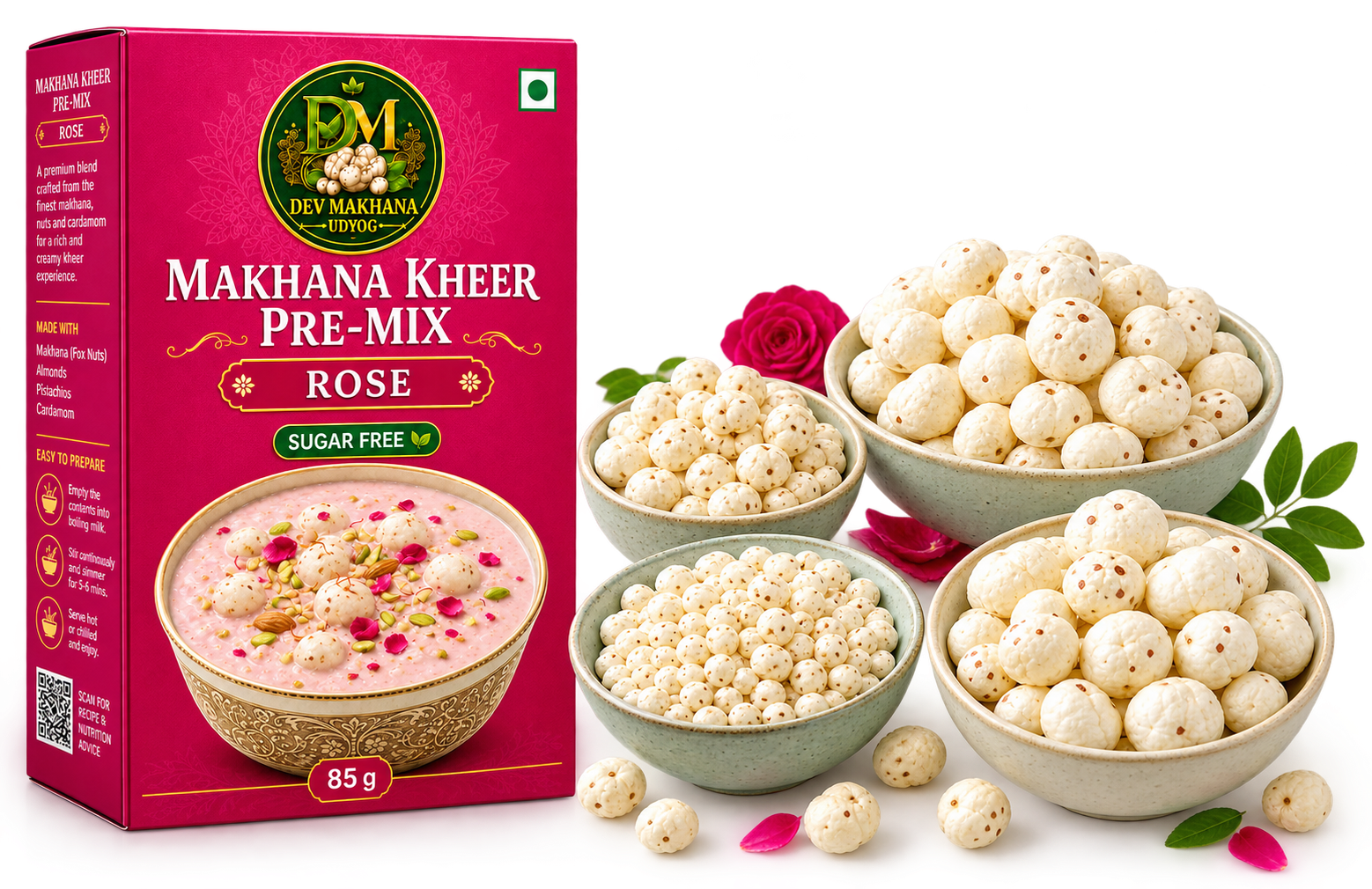
Makhana is usually sold after the seeds have been processed and popped. The resulting white, lightweight pieces are crunchy when roasted and have a naturally mild taste.
Is Makhana the Same as Lotus Seeds?
This is one of the most common questions about makhana.
Technically, no.
Makhana comes from Euryale ferox, while true lotus seeds come from the lotus plant, Nelumbo nucifera. The two are different plants.
However, “lotus seeds” is sometimes used as a popular or commercial name for makhana, especially in food and wellness content. For botanical accuracy, Euryale ferox seed or gorgon nut is the more precise description.
So, when you see the terms:
-
Makhana
-
Phool makhana
-
Fox nuts
-
Foxnut
-
Gorgon nuts
-
Euryale ferox seeds
they generally refer to the same food product used in Indian cuisine.
Where Does Makhana Come From?
Makhana is an aquatic crop associated with warm, humid environments and shallow water bodies.
In India, Bihar is particularly important for makhana production, especially the Mithila region. Makhana is also cultivated in parts of West Bengal, Assam, Odisha, Manipur and other regions. ICAR has documented its cultivation in stagnant water bodies and has worked on improved varieties and cultivation methods.
The crop is also grown in other parts of Asia, including China and several South and East Asian regions.
Makhana cultivation is different from growing ordinary field crops because the plant thrives in aquatic or waterlogged conditions. This makes it a distinctive agricultural crop with an important role in wetland-based farming systems.
Why Is Bihar Famous for Makhana?
Bihar has a long-standing tradition of growing and processing makhana. The crop is particularly associated with the Mithila region, where it has economic, cultural, and culinary importance.
The Indian Council of Agricultural Research has developed improved makhana varieties. For example, Swarna Vaidehi was released in 2013 as an improved variety with a reported production potential of approximately 2.8–3.0 tonnes per hectare under farmers' field conditions.
More recent agricultural research is also exploring ways to improve makhana cultivation and integrate it with other farming systems, including fish culture.
How Is Makhana Made?
The makhana that you buy in a packet does not come directly from the plant as the white, fluffy snack.
The basic process involves several stages:
1. Growing the Crop
Euryale ferox grows in suitable ponds, wetlands, and waterlogged areas. The plant develops large leaves and produces flowers and seeds.
2. Harvesting the Seeds
The mature seeds sink into the water and are collected during harvesting.
3. Cleaning and Drying
The harvested seeds are cleaned and dried before further processing.
4. Grading
Seeds can be sorted according to size and quality.
5. Roasting and Popping
The hard seeds are heated using traditional or improved processing methods. The intense heat causes the kernel to expand and produce the familiar white, crunchy makhana.
This process is somewhat similar to popcorn in the sense that heat causes the internal structure of the seed to expand, although the crops and processing methods are completely different.
What Does Makhana Taste Like?
Makhana has a mild, slightly nutty flavor and an airy, crunchy texture after roasting.
Its relatively neutral taste is one reason it works so well in different recipes.
You can season it with:
-
Black pepper
-
Cumin
-
Chaat masala
-
Red chilli
-
Turmeric
-
Herbs
-
Cinnamon
-
Cardamom
Makhana can also be cooked with milk, vegetables, nuts, yogurt, or creamy gravies.
Makhana Nutrition
Makhana's nutritional profile can vary depending on the product and how it is prepared. Plain makhana is primarily a carbohydrate-containing food, with some protein and fibre, and naturally contains minerals such as magnesium, potassium, phosphorus, and iron.
A 2026 nutrition review describes makhana as a source of complex carbohydrates and resistant starch, with moderate protein, relatively low fat, minerals, and various phytochemicals.
However, packaged flavored makhana can have considerably different nutrition because of added oil, salt, sugar, or other ingredients.
For this reason, it is useful to distinguish between plain makhana and heavily flavored or fried makhana products.
Potential Health Benefits of Makhana
Makhana is often promoted as a “superfood,” but it is better to look at its nutritional qualities realistically rather than treating it as a cure-all food.
1. A Convenient Snack Option
Plain or lightly roasted makhana can provide a crunchy alternative to many highly processed snack foods.
Its mild taste also makes it easy to prepare at home with controlled amounts of oil and seasoning.
2. Provides Plant-Based Protein
Makhana contains plant protein, although it should not be considered a complete replacement for protein-rich foods such as pulses, dairy, eggs, or other protein sources.
3. Contains Fibre
Makhana provides dietary fibre, which is an important part of a balanced diet.
4. Provides Minerals
Makhana contains minerals including magnesium, potassium, phosphorus, and iron. The exact amounts vary according to the product and serving size.
5. Naturally Low in Fat
Plain makhana itself is relatively low in fat. However, the amount of oil, ghee, butter, or other ingredients added during cooking can substantially change the final dish.
6. Naturally Gluten-Free
Makhana is naturally gluten-free, making it an option for people who avoid gluten, provided the packaged product and seasonings do not contain gluten-containing ingredients or cross-contamination.
Can Makhana Help With Weight Management?
Makhana is often marketed as a weight-loss food, but no individual food automatically causes weight loss.
Roasted makhana can be a useful snack choice when eaten in appropriate portions because it is light, crunchy, and can be prepared with relatively little added fat.
However, overall calorie intake, portion size, physical activity, and the rest of the diet are much more important than simply adding makhana to your meals.
If your goal is weight management, choose lightly roasted makhana rather than versions heavily coated with oil, sugar, or calorie-dense sauces.
How to Roast Makhana at Home
Roasting makhana is extremely simple.
Ingredients
-
2 cups plain makhana
-
1 teaspoon ghee or oil, optional
-
Salt to taste
-
Black pepper or other spices
Method
-
Heat a heavy pan over low to medium heat.
-
Add the makhana.
-
Dry roast for about 6–8 minutes.
-
Stir frequently to prevent burning.
-
Test one piece. It should be crisp rather than chewy.
-
Add a small amount of ghee or oil if desired.
-
Add your preferred seasoning.
-
Mix well and allow the makhana to cool completely.
Once cooled, store it in an airtight container.
Popular Makhana Recipes
One of the biggest advantages of makhana is its versatility.
Roasted Makhana
The simplest option is roasted makhana seasoned with salt, black pepper, cumin, or chaat masala.
Masala Makhana
Add chilli powder, cumin, turmeric, and chaat masala for a spicy snack.
Makhana Chaat
Combine roasted makhana with vegetables, coriander, chutneys, and spices for a crunchy chaat.
Makhana Kheer
Makhana can be simmered with milk, cardamom, nuts, and sweetener to make a traditional-style dessert.
Makhana Curry
Roasted makhana can be added to tomato-based or creamy gravies to create a flavorful main dish.
Makhana for Fasting
Makhana is commonly eaten during fasting periods in India.
Roasted makhana, makhana kheer, and certain makhana-based dishes can be prepared using ingredients traditionally accepted during fasting.
However, fasting rules vary according to family, region, religious tradition, and individual practice. Ingredients such as regular salt, certain spices, grains, or packaged seasonings may not be suitable for every type of fast.
Always prepare the recipe according to the specific fasting tradition you follow.
How to Choose Good-Quality Makhana
When buying makhana, look for pieces that are:
-
Clean and dry
-
Crisp after roasting
-
Free from insects or visible contamination
-
Relatively uniform in size
-
Free from an unusual or stale smell
For packaged products, check the ingredient list and nutrition label. Plain makhana gives you more control over the amount of oil, salt, and seasoning you consume.
If buying flavored makhana, compare products for added sodium, sugar, and oils.
How to Store Makhana
Makhana can lose its crunch if exposed to moisture.
For best storage:
-
Keep roasted makhana completely cool before storing.
-
Use an airtight container.
-
Keep it in a cool, dry place.
-
Avoid storing it near steam or moisture.
-
If the makhana becomes soft, it can usually be re-roasted briefly to restore some crispness.
Always discard food that develops an unusual smell, visible mold, or other signs of spoilage.
Are There Any Side Effects of Eating Makhana?
Makhana is generally used as a food, but individual tolerance can vary.
Eating very large quantities may contribute to excessive calorie or carbohydrate intake, depending on the preparation. Heavily salted or sweetened versions can also contain more sodium or added sugar.
People with specific medical conditions, allergies, or dietary restrictions should consider their individual nutritional needs.
It is also worth remembering that claims about makhana's antioxidant or disease-preventing properties are not the same as proven medical treatments. Some research on phytochemicals and health effects is promising, but much of the evidence is experimental or preclinical rather than based on large human clinical trials.
Makhana vs Other Popular Snacks
Makhana is often compared with popcorn, nuts, chips, and other snack foods.
The comparison depends heavily on preparation.
Plain roasted makhana can be relatively light and low in fat, while a makhana product coated in oil, sugar, or rich seasonings can be considerably more calorie-dense.
Rather than asking whether makhana is universally “better,” it is more useful to look at:
-
Portion size
-
Added oil
-
Added sugar
-
Sodium
-
Overall ingredients
-
Your individual dietary requirements